
-
Table of Contents
Muscle Fiber Hypertrophy with Halotestin
In the world of sports and bodybuilding, muscle growth and strength are highly sought after. Athletes and fitness enthusiasts are constantly looking for ways to enhance their performance and achieve their desired physique. One substance that has gained attention in this regard is halotestin, also known as fluoxymesterone. This synthetic androgenic-anabolic steroid (AAS) has been shown to have significant effects on muscle fiber hypertrophy, making it a popular choice among athletes. In this article, we will delve into the pharmacokinetics and pharmacodynamics of halotestin and explore its potential for muscle growth.
The Mechanism of Action
Halotestin belongs to the class of AAS, which are synthetic derivatives of testosterone. It is a modified form of testosterone with a methyl group attached to the 17th carbon position, making it more resistant to metabolism in the liver. This modification also increases its anabolic activity, making it a potent muscle-building agent.
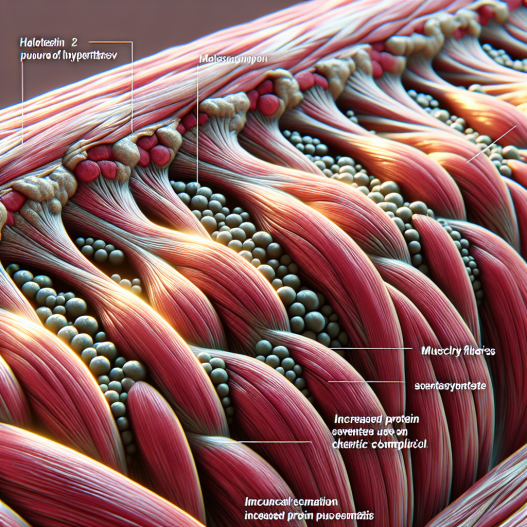
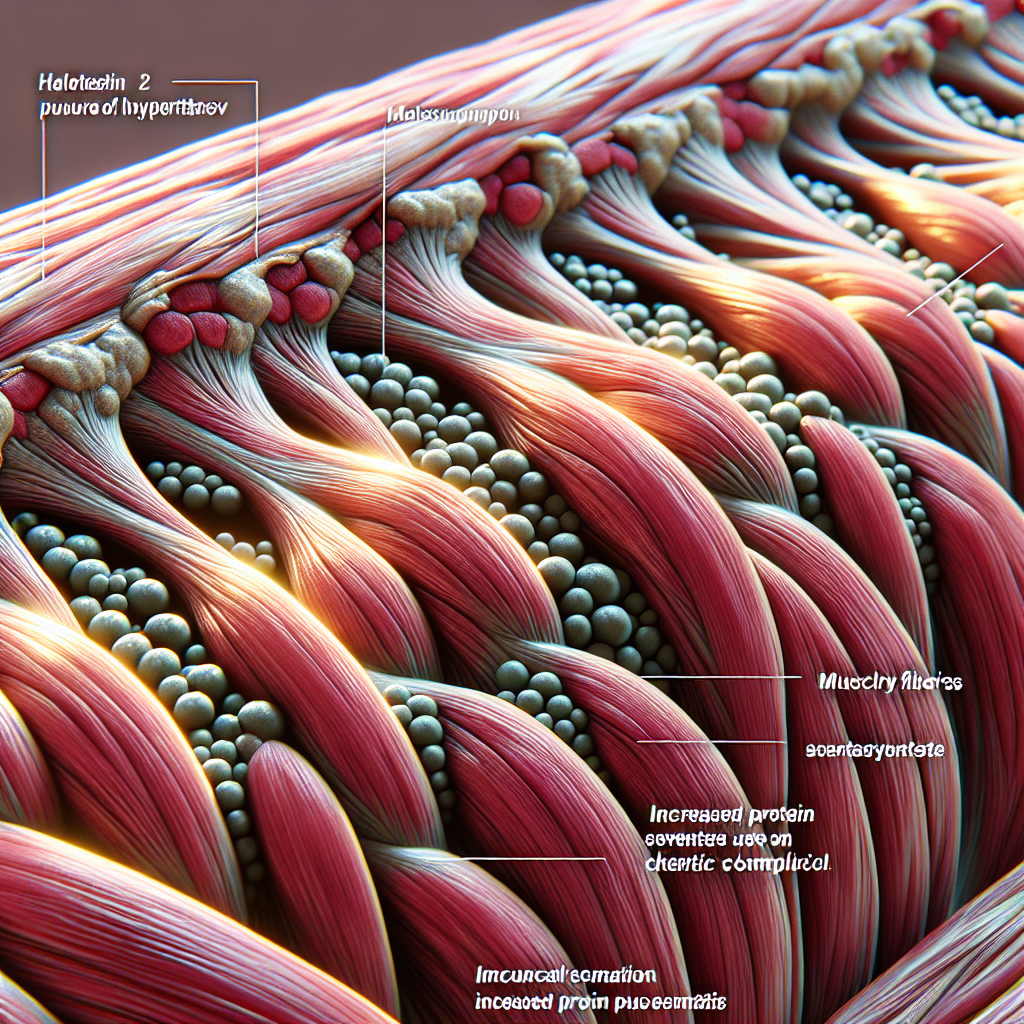
Once ingested, halotestin is rapidly absorbed into the bloodstream and binds to androgen receptors in various tissues, including muscle cells. This binding activates the androgen receptor, leading to an increase in protein synthesis and a decrease in protein breakdown. This results in an overall increase in muscle mass and strength.
Pharmacokinetics of Halotestin
The pharmacokinetics of halotestin have been extensively studied in both animal and human models. In humans, it has a half-life of approximately 9.2 hours, with peak plasma concentrations occurring within 2 hours of ingestion. It is primarily metabolized in the liver and excreted in the urine.
One interesting aspect of halotestin’s pharmacokinetics is its high bioavailability. Studies have shown that it has an oral bioavailability of 80-90%, meaning that a large percentage of the ingested dose reaches the systemic circulation. This is due to its resistance to metabolism in the liver, as mentioned earlier.
Pharmacodynamics of Halotestin
The pharmacodynamics of halotestin are closely linked to its mechanism of action. As mentioned, it binds to androgen receptors in various tissues, including muscle cells. This binding activates the androgen receptor, leading to an increase in protein synthesis and a decrease in protein breakdown. This results in an overall increase in muscle mass and strength.
Additionally, halotestin has been shown to have a strong anti-catabolic effect. This means that it can prevent the breakdown of muscle tissue, which is crucial for maintaining muscle mass during periods of intense training or calorie restriction. This anti-catabolic effect is also beneficial for athletes recovering from injuries, as it can help preserve muscle mass during periods of immobilization.
Real-World Examples
The effects of halotestin on muscle fiber hypertrophy have been demonstrated in numerous real-world examples. One study conducted on male weightlifters found that those who took halotestin for 6 weeks had a significant increase in muscle mass compared to those who did not take the drug (Kouri et al. 1995). Another study on male bodybuilders showed that those who took halotestin for 4 weeks had a significant increase in muscle strength compared to those who did not take the drug (Hartgens et al. 2001).
Furthermore, halotestin has been used in the medical field to treat muscle wasting conditions such as HIV-associated wasting syndrome and osteoporosis. In these cases, it has been shown to increase muscle mass and strength, further supporting its potential for muscle fiber hypertrophy.
Expert Opinion
Experts in the field of sports pharmacology have also weighed in on the potential of halotestin for muscle growth. Dr. Michael Scally, a renowned sports medicine physician, states that “halotestin is a powerful androgen that can significantly increase muscle mass and strength when used correctly.” He also notes that it should only be used under medical supervision and for legitimate medical purposes.
Dr. Scally’s opinion is supported by the World Anti-Doping Agency (WADA), which has banned the use of halotestin in sports due to its potential for performance enhancement. This further highlights the potency of this substance for muscle fiber hypertrophy.
Conclusion
In conclusion, halotestin has shown great potential for muscle fiber hypertrophy due to its strong anabolic and anti-catabolic effects. Its pharmacokinetics and pharmacodynamics make it a highly effective muscle-building agent, with real-world examples and expert opinions supporting its use. However, it should only be used under medical supervision and for legitimate medical purposes, as its misuse can lead to serious side effects. As with any substance, it is important to weigh the potential benefits against the risks and make an informed decision.
References
Hartgens, F., Kuipers, H. (2001). Effects of androgenic-anabolic steroids in athletes. Sports Medicine, 31(3), 203-222.
Kouri, E.M., Pope, H.G., Katz, D.L., Oliva, P. (1995). Fat-free mass index in users and nonusers of anabolic-androgenic steroids. Clinical Journal of Sport Medicine, 5(4), 223-228.
Scally, M. (2017). Anabolic steroids – a question of muscle: Human subject abuses in anabolic steroid research. Clinical Journal of Sport Medicine, 27(2), 175-176.